
Dental Crowns
A dental crown can be used anytime a tooth may need to be capped in order to restore and maintain its health or for aesthetic purposes. Dental crowns are different than several other kinds of cosmetic dentistry options because you won’t have to lose your entire tooth, but can preserve the remaining tooth.
At The Dentists of Omaha, our skilled cosmetic dentists can determine if your teeth are good candidates for dental crowns and discuss the entire process with you.

To schedule a consultation about tooth crowns or other cosmetic dentistry needs, please contact us by calling Hillsborough: (402) 802-9956 , Village Pointe: (402) 505-7474, Ralston Square: (402) 307-6215, or Dundee: (402) 307-6220 today.
What is a Dental Crown?
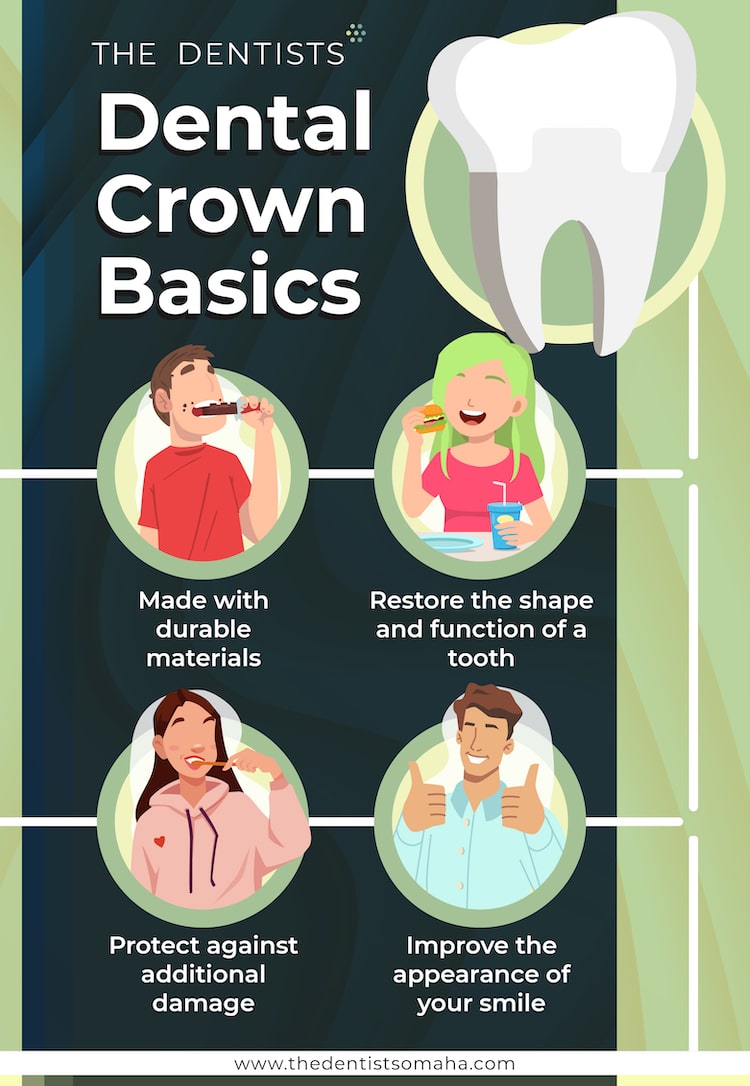
A crown is a type of dental restoration that is usually placed on top of a damaged tooth. Not only can it make the tooth stronger and protect it from breaking, but it can also improve the way it looks. That’s because a crown covers the visible portion of a tooth to restore its normal shape and size.
In addition to capping a natural tooth, dental crowns can also be used for other purposes. These restorations are often involved in treating tooth loss because they can hold a dental bridge in place. They also function as a stable and aesthetic replacement tooth when used on top of a dental implant.
What Do Dental Crowns Fix?
Dental crowns are a great option for our dentists to use anytime you have a tooth that can be preserved without complete removal. We would use dental crowns to help with the following tooth issues:
- To protect a tooth that has a large dental filling
- To preserve a tooth that has undergone a root canal
- To complete a dental implant
- Chipped teeth
- Cracked teeth
- Worn down teeth
- Broken teeth
A porcelain dental crown is expertly fit to your tooth’s individual size, shape, and color so that it blends in seamlessly with your smile and bite. Our dentists will take our time to ensure that you’re happy with the feel and look of your crown.
What Are Dental Crowns Made From?
Dental crowns are available in a wide variety of materials including stainless steel, metal, porcelain fused to metal, resin, and ceramic. Some materials are better than others. The best options resist wear over time and blend in seamlessly with the rest of your smile.
When deciding which material to use, our dentists will consider many factors, including the location and function of the tooth as well as your cosmetic goals. However, you will most likely receive an all-ceramic or all-porcelain crown. That is the standard type of crown that is placed today.
Dental Crown Process
Dental crowns are expertly made in a lab that is outside of our Omaha dental office. Because of this, dental crowns require two visits. During the first visit, we will prepare your tooth for the crown by removing any portions of it that are too cracked or unhealthy to remain. Once the tooth is prepared, we will take impressions of your teeth. We will ensure that you’re happy with the feel and fit of these impressions and then they will be sent to the lab to have your crown(s) created. At the lab, the crowns are digitally made to ensure a perfect fit and perfect color match.
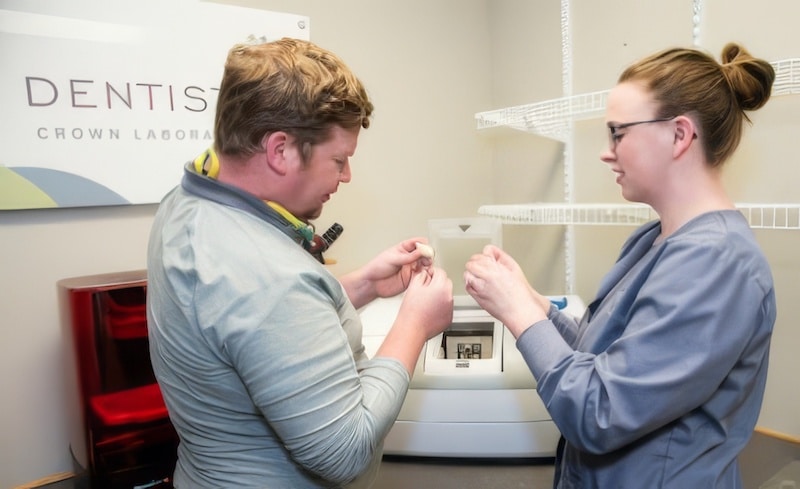
While waiting for the lab to create your crown, we will fit you with a temporary crown. This will be permanent-enough that you will still be able to eat, speak, and care for your teeth without many changes to your normal eating and dental care habits.
After 2-3 weeks, your dental crown will be ready and we’ll have you come back in to one of our four convenient locations. Our dentists will remove your temporary crown and place the permanent crown, making adjustments as we go to ensure that your bite is perfect.
See What Our Patients Are Saying…
Is the Dental Crown Process Painful?
Most patients find that the dental crown process is very tolerable. Our dentists will numb the treatment area for your comfort and check in with you through the procedure. If you still feel apprehensive about getting a dental crown, sedation dentistry might be a great option.
Who is an Ideal Candidate for Dental Crowns?
Dental crowns can treat damaged, discolored, badly shaped, and missing teeth. If you are dealing with one or more of these conditions, then you may be an ideal candidate for a crown.
A consultation with our dentists is the best way to learn if this type of restoration is right for you. We will determine if a crown can restore your oral health and function — or if another option would be a better match.
Are There Any Potential Risks of Dental Crowns?
Dental crowns are a safe and effective way to restore your smile. Millions of crowns are successfully placed each year.
There are few risks associated with dental crowns — most of which can be easily fixed. Some potential issues that you might experience over time include sensitivity and discomfort. It is also possible for a crown to become chipped, loose, or fall off entirely.
If any of these things happen to you, call our office right away so that we can make things right. We offer emergency dental appointments to repair dental restorations.
Are Dental Crowns Permanent?
Dental crowns are made of durable materials and can last for many years. Their exact longevity depends on factors such as the material used and their location in the mouth.
There are several reasons why a crown may fail. It could crack or break. It could also lose support from the tooth below. The good news is that patients who take care of their crowns with the right dental hygiene habits and regular dental check-ups may never experience problems.
How Should I Care for a Dental Crown?
Dental crowns are relatively low maintenance. You can take care of them like you take care of your natural teeth. Here are some tips to keep in mind:
- Brush and floss daily
- Don’t chew on ice or hard objects
- Stay away from sticky and chewy foods
- Schedule regular dental visits
Remember that you can still get a cavity under a dental crown. Because your crown depends on the health of the tooth supporting it, you should take care of your smile to achieve the best results.
Dental Crowns for Front Teeth vs. Back Teeth
Dental crowns are designed differently depending on where they are placed in your mouth. Front teeth and back teeth serve different purposes, and your crown must meet those unique needs.
Crowns for front teeth are typically crafted with aesthetics in mind. These teeth are visible when you smile, so crowns in this area are designed to closely match the color, shape, and translucency of natural enamel. The goal is to restore your tooth while keeping your smile looking natural and confident.
Back teeth, on the other hand, do most of the heavy chewing. Crowns placed on molars and premolars must be strong enough to withstand biting forces while still maintaining a natural look. Your dentist will recommend the best material and design based on the tooth’s location and function.
Common Myths About Dental Crowns
Myth: Dental Crowns Look Fake
Some people assume a crown will be noticeable or unnatural. Today’s dental crowns are custom-designed to match the shape, shade, and light-reflecting qualities of your surrounding teeth, allowing them to blend naturally into your smile.
Myth: Dental Crowns Ruin Healthy Teeth
Crowns are only recommended when a tooth needs added protection or structural support. Rather than harming teeth, crowns help preserve remaining tooth structure and prevent further damage.
Myth: Getting a Dental Crown Is Painful
Many patients expect the crown procedure to be uncomfortable. In reality, treatment is performed under local anesthesia, and most people experience little to no discomfort.
Myth: Dental Crowns Require Special or Complicated Care
Some believe crowns need extensive maintenance. In most cases, caring for a crown is no different than caring for natural teeth with regular brushing, flossing, and dental visits.
Frequently Asked Questions
Why Choose The Dentists of Omaha for Dental Crowns?
At The Dentists of Omaha, dental crowns are placed with precision, durability, and long-term oral health in mind. Our patient-centered care has earned Omaha Magazine’s “Best Family Dentist” award for 17 consecutive years.
Led by Dr. Jay Samuelson—an award-winning cosmetic dentist with advanced training from the Las Vegas Institute for Advanced Dental Studies (LVI)—our team brings extensive experience in restorative and cosmetic dentistry to every case. With multiple convenient locations in Omaha, our dentists maintain consistent clinical standards while delivering personalized treatment. We carefully evaluate your bite, aesthetics, and overall dental health to ensure your crown looks natural and functions comfortably for years to come.
Schedule Your Omaha Dental Crown Visit Today!
If you believe that you have a tooth or teeth that could be preserved through dental crowns, please contact The Dentists today. Tooth crowns are a great way to avoid more invasive and expensive treatment.
The Dentists has multiple locations in Omaha; find the office near you by calling Hillsborough: (402) 802-9956 , Village Pointe: (402) 505-7474, Ralston Square: (402) 307-6215, or Dundee: (402) 307-6220 . We serve all of our Omaha residents conveniently, as well as patients in nearby Bellevue, Lincoln and other areas.